

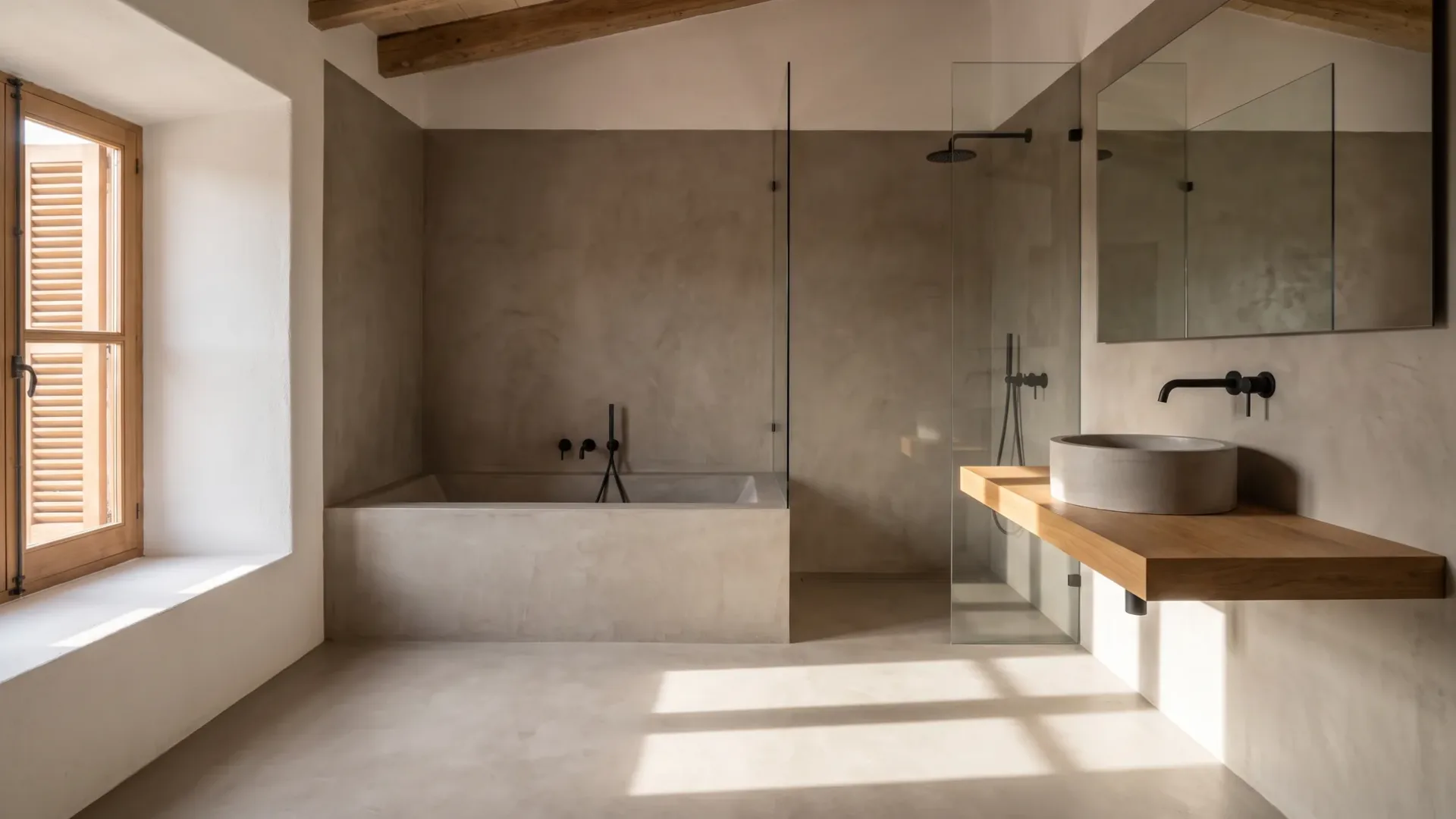
Microcement Bathrooms in Mallorca
Microcement is a thin, hand-applied cement finish that turns a bathroom into one continuous surface: floor, walls, the shower, sometimes the basin and the bath, with no tiles and no grout lines anywhere. It is the modern Mediterranean bathroom, and it is a material that lives or dies by who applies it and what they apply it to. Describe the room and we pass the request to bathroom renovation companies near you that work with it.
request describes the job
companies see it
for you, always
obligation to accept
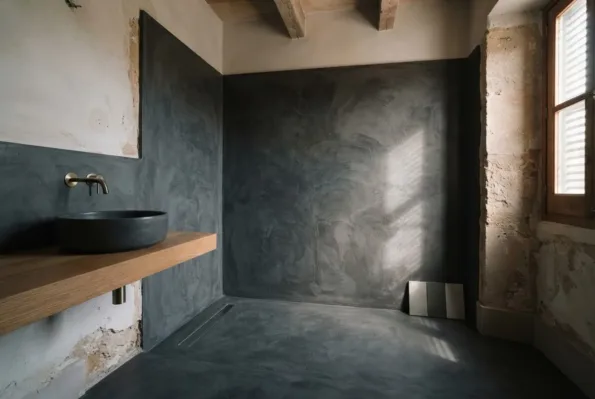
What it is, and what it depends on
Microcement is applied in thin coats over a prepared substrate, sealed, and left as the finished surface. Because it is continuous, it follows whatever is underneath it – which is its beauty and its risk. A sound, stable, correctly primed substrate gives a surface that reads as one piece of stone. A substrate that moves, cracks or holds moisture gives a surface that does the same, a few months later, in a room that is wet every day.
In a bathroom the substrate includes the waterproofing. Microcement itself is sealed, but the sealer is the last line, not the first: the wet area under it is waterproofed the way it would be under tiles, with the falls formed and the corners detailed, before a single coat goes on. An applicator who talks about the substrate and the waterproofing before the colour has done this in bathrooms before.
The finish is chosen from a range of colours and textures, and it is applied by hand, so it varies slightly across the room in a way that is part of the look. Ask to see a sample on a board, and ideally a bathroom the applicator has finished.
Where microcement goes
Walls
Floors and showers
Over existing tiles
What a microcement job usually covers
- Assessment of the substrate – what it is, whether it is sound, whether it holds moisture
- Preparation: cleaning, repair, priming, and a base coat or mesh where the substrate needs it
- Waterproofing of the wet area under the microcement, with the falls formed
- The base coats, built up by hand
- The finish coats, in the chosen colour and texture
- Sealing, in a sealer suited to a wet room and a floor
- The details: the junctions with glass, fixtures, drain and thresholds
- Curing time before the room is used, which the applicator sets
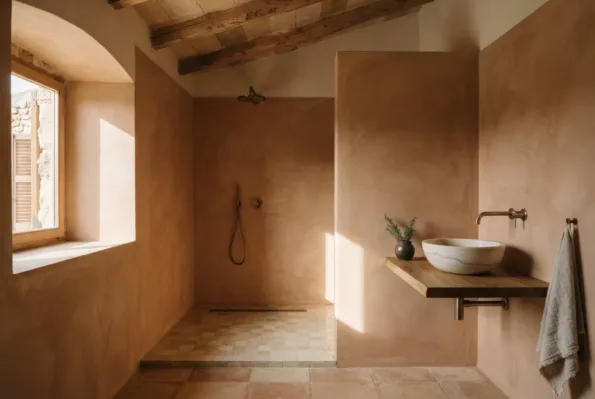
Microcement or tiles
Microcement gives one surface, no grout, a soft hand-finished look, and the ability to go over existing tiles when they are sound. Tiles give a wider choice of pattern and colour, a surface that is made in a factory rather than in the room, and the ability to replace one tile rather than refinish a wall. Both work in a bathroom on the island when the work under them is done properly, and both fail when it is not.
The honest comparison is about the room and the owner. A small bathroom that wants to feel bigger, a finca bathroom that wants to feel like plaster, an owner who dislikes grout: microcement. A family bathroom that will take knocks, a floor that wants a visible grip, an owner who wants pattern: tiles. Many bathrooms use both – microcement on the walls, a tiled floor with a fall in the shower.
What makes two microcement quotes differ
The ranges live on the cost guide.
- How much preparation the substrate needs, and whether tiles are being stripped or covered
- Whether the waterproofing is included, and which system
- Walls only, or walls, floor and shower
- The finish and colour chosen, and the number of coats
- The sealer, and whether it is specified for a floor
- How the junctions with glass, drain and fixtures are detailed
- Whether the fixtures are being removed and refitted
- The applicator’s own experience with bathrooms, which is worth asking about directly
How your request reaches a company
Mallorca Bathrooms is a comparison service. A request for a microcement bathroom goes to the bathroom renovation companies on our list; they quote the work and carry it out, and any agreement is between you and the company you pick.
-
01
Describe the job
Tell us the property, roughly what you want and where it is. Photographs and a rough plan help, though neither is required.
-
02
We match it
The request goes to companies that work in your area and take on this kind of job at this size.
-
03
They quote you
Each company contacts you directly with its own price, timing and approach. We do not set any of it.
-
04
You compare and choose
Put the quotes side by side and take the one you want, or none of them. Using the site costs you nothing.
Is microcement suitable for a shower?
Yes, when the wet area under it is waterproofed and the fall is formed in the substrate, and the finish and sealer are chosen for a floor that is wet every day. It is not suitable as the waterproofing itself. Ask the applicator to describe the build-up from the substrate to the sealer.
Is it slippery when wet?
That depends on the finish and the sealer, and it is a question to ask by name before the floor is done. A smoother, glossier finish looks more like polished stone and grips less; a matt finish with texture grips more. On a shower floor the second is the right answer.
Can it go over my existing tiles?
Over sound, well-bonded tiles on a dry substrate, often yes, and it avoids the strip-out. Over tiles that sound hollow, are loose, or sit on a wet area that has already failed, no – it covers the problem, it does not fix it, and the problem comes back through the new surface.
How is it maintained?
Like a sealed stone floor: neutral cleaners, no abrasives, and the sealer renewed when the applicator says so. It does not have grout to clean, which is why many people choose it. Ask the applicator for written care instructions; a good one will have them ready.
Get microcement quotes
Describe the room and the surfaces you want it on, and let several companies price the preparation, the waterproofing and the finish against the same brief.